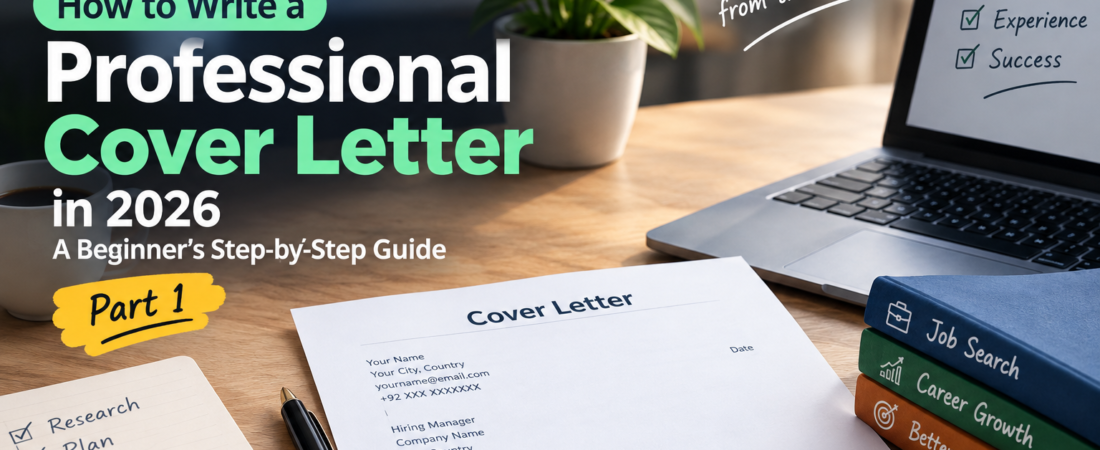
Meta Description
Learn how to write a professional cover letter in 2026 with this simple step-by-step guide. Discover what to include, how to structure it, and common mistakes to avoid.
Introduction
Applying for a job can feel stressful, especially when you are competing with many other candidates. Your CV shows your skills and experience, but a cover letter gives you a chance to explain why you are interested in the job and why you could be a good fit.
Fortunately, writing a cover letter does not have to be difficult. A good cover letter is usually short, clear, and specific to the job you are applying for.
Instead of repeating everything from your CV, you should use it to highlight your most relevant skills and show some personality.
In this guide, you will learn how to write a cover letter in 2026, even if you have little or no previous experience.
If you need more information about CV, You can Read our guide at,
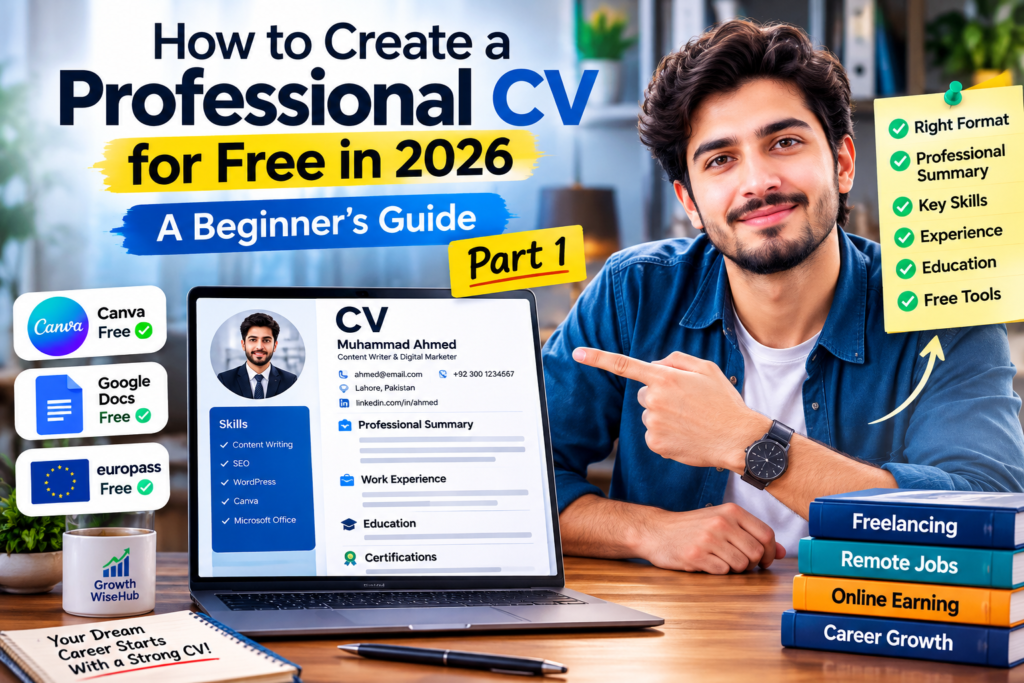
🔗 How to Create a Professional CV for Free in 2026: Step-by-Step Guide (Part 1)
What Is a Cover Letter?
A cover letter is a short document that you normally send with your CV when applying for a job.It introduces you to the employer and explains why you are applying for the position.
More importantly, it connects your skills and experience with what the employer is looking for.For example, if a company is hiring a social media assistant, you could mention your experience creating posts, managing social media pages, or using tools such as Canva.
Therefore, your cover letter should not simply say:> “I am looking for a job and would like to work for your company.”Instead, it should give the employer a reason to continue reading your application.
If you want to learn more about the purpose and structure of a cover letter, you can also explore this cover letter guide from,
Why Is a Cover Letter Important in 2026?
The job market is becoming increasingly competitive. As a result, employers may receive many applications for a single position.Your CV provides important information, but your cover letter can add context.
For instance, you can explain:
- Why you want the particular position
- Which skills make you suitable
- What interests you about the company
- How your previous experience relates to the role
- What you can potentially contribute
However, this does not mean your cover letter should be very long.In most cases, one well-written page is enough.
Step 1: Understand the Job Before Writing
Before writing anything, carefully read the job advertisement.This is one of the most important steps because every job has different requirements.
Look for keywords such as:
- Communication skills
- Microsoft Office
- Customer service
- Content writing
- Social media management
- Data entry
- Problem-solving
- Teamwork
- Time management
Next, identify the skills that you actually have.
Then, choose two or three relevant skills and mention them naturally in your cover letter.For example, if the job requires strong communication skills and you have worked with customers before, you can briefly explain that experience.
The goal is simple: show the employer that you understand what they need.
Step 2: Start With a Professional Header
At the top of your cover letter, add your basic contact information.You can include:
- Your Name
- City
- Country
- Email Address
- Phone Number
- LinkedIn Profile (if available)
Then add the date and the employer’s information if you have it.
For example:
Muhammad Ali. Lahore, Pakistan. yourname@email.com. +92 XXX XXXXXXX. September 28, 2026. Hiring Manager. ABC Company.
Keep this section clean and simple.There is no need to use too many colors, fancy fonts, or unnecessary graphics. A professional cover letter should be easy to read.
Step 3: Use a Professional Greeting
After the header, start with a polite greeting.If you know the hiring manager’s name, use it.For example:
Dear Mr. Ahmed, or. Dear Ms. Sara,
If you do not know the person’s name, you can use:
Dear Hiring Manager,This is usually better than using an overly casual greeting such as “Hi” or “Hello.”Also, avoid writing:
To Whom It May Concernunless you genuinely cannot identify the appropriate person.
Step 4: Write a Strong Opening Paragraph
Your first paragraph should quickly explain which position you are applying for and why you are interested in it.
For example:> I am writing to apply for the Digital Marketing Assistant position at ABC Company. I have a strong interest in digital marketing and have developed practical skills in content creation, social media management, and online research.
I would be excited to use these skills while continuing to learn and grow with your team.Notice that this introduction is short.You do not need to tell your entire life story. Instead, focus on the job and what makes you relevant to it.
Step 5: Highlight Your Most Relevant Skills
Now comes the main part of your cover letter.Choose two or three skills that match the job description.For example, if you are applying for a content-writing position, you might mention:
- Writing and editing
- Research
- SEO basics
- Communication
- Attention to detail
However, don’t simply create a list.Instead, explain how you have used those skills.
For example:
> I have developed strong writing and research skills through creating online content and working with different topics. I also understand the importance of clear structure, accurate information, and SEO-friendly writing. These skills would help me contribute effectively to your content team.
This sounds much more natural than simply writing:> “I have good writing skills, research skills, and SEO skills.”
A Quick Tip for Beginners
If you don’t have professional experience, don’t assume you have nothing to mention.You can talk about:
- Personal projects
- University or school projects
- Freelance work
- Volunteer work
- Online courses
- Internships
- Relevant skills
- Your own website or blog
Practical projects you completed yourself
For example, someone without a formal digital marketing job could still mention that they managed a personal website, created social media content, or completed relevant online courses.Therefore, lack of formal experience does not mean you cannot write a strong cover letter.
Step 6: Connect Your Skills With the Company
After explaining your skills, connect them with the position.Instead of only talking about what you want, explain how your skills could be useful to the employer.
For example:
> I believe my combination of writing, research, and digital skills could allow me to contribute to your marketing team. I am also comfortable learning new tools and adapting to different tasks, which I believe is important in a fast-changing digital environment.
This makes your cover letter more focused on the employer’s needs.
What We Have Covered So FarBy now,
Your cover letter should have:
- ✅ Your contact information
- ✅ A professional greeting
- ✅ A strong opening
- ✅ Your relevant skills
- ✅ A connection between your skills and the job
- ✅ Examples of your abilities
But we’re not finished yet.In Part 2, we’ll cover:
- How to write the experience section
- What to write if you have no experience
- How to write a strong closing paragraph
- How to end your cover letter professionally
- Common cover-letter mistakes
- Free tools you can use
- A simple cover-letter checklist
Final Thoughts
Writing a professional cover letter may seem difficult at first, but once you understand the basic structure, it becomes much easier.
In Part 1, we learned what a cover letter is, why it can be useful, and how to start writing one step by step.
We also covered how to understand a job description, create a professional header, choose the right greeting, write a strong opening paragraph, and highlight your most relevant skills.
Most importantly, your cover letter should be connected to the specific job instead of simply repeating everything written in your CV.
If you are a beginner with little professional experience, don’t worry. Personal projects, freelance work, courses, internships, and other practical activities can also help you explain your skills.
In Part 2, we will continue from here and learn how to write about your experience, what to include when you have no formal experience, how to write a strong closing, common mistakes to avoid, and some useful free tools for creating a professional cover letter.
So, if you are preparing for your next job application, keep your CV ready and use the steps from this guide to create a cover letter that is clear, relevant, and professional. 🚀