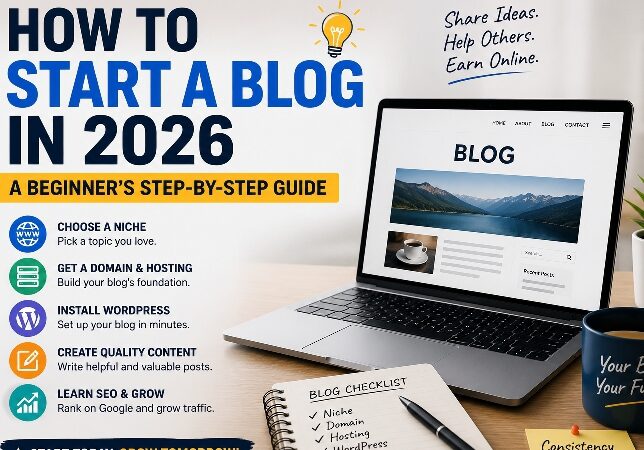
URL Slug.how-to-start-a-blog-in-2026
Meta Description
Learn how to start a blog in 2026 with this beginner-friendly guide. Choose a niche, set up WordPress, learn SEO, and grow your blog successfully.
Introduction
Starting a blog in 2026 is one of the best ways to share your knowledge, build an online presence, and create long-term income opportunities.
Whether you want to write about technology, artificial intelligence, travel, health, or personal finance, blogging allows you to reach people all over the world.
However, many beginners think blogging is difficult or expensive. The good news is that anyone can start a professional blog with the right guidance, a domain name, reliable hosting, and consistent effort. In this guide, you’ll learn the complete process step by step.
🔗 Internal Link
If you’re interested in using AI for blogging, don’t miss our guide:
🔗Top 5 AI Tools That Can Help You Earn Money Online in 2026.
Step 1: Choose the Right Blogging Niche
Before creating a website, decide what you want to write about. Choosing one clear niche helps readers understand your website and makes it easier for search engines to identify your expertise.Some popular blogging niches include:
a. Artificial Intelligence (AI)
b. Technology
c. Online Earning
d. Digital Marketing
e. Personal Finance
f. Health and Fitness
g. Education
👉 Tip: Choose a niche that matches both your interest and long-term goals. Writing consistently becomes much easier when you enjoy the topic.
Step 2: Register a Domain Name
A domain name is your website’s online identity. It should be short, memorable, and relevant to your niche. For example, a name like GrowthWiseHub.com is easy to remember and can cover multiple technology-related topics.
When selecting a domain name.
a. Keep it simple.
b. Avoid numbers and hyphens.
c. Choose a name that reflects your brand.
Step 3: Buy Reliable Hosting
Once you have a domain name, you’ll need web hosting. Hosting stores your website files and makes them accessible to visitors around the world.
For beginners, reliable hosting with one-click WordPress installation is usually the easiest option because it saves time and simplifies website management.
🌐 External Link
Hostinger:
https://www.hostinger.com�
Step 4: Install WordPress
WordPress is the world’s most popular content management system (CMS). It allows you to create and manage your blog without needing advanced coding skills. Most hosting providers offer one-click WordPress installation, making the setup process simple for beginners.
After installing WordPress, choose a clean and mobile-friendly theme. A fast-loading website improves user experience and can also support better search engine rankings.
Transition Word: In addition, keeping your website updated helps improve security and performance.
Learn more about WordPress.
🔗https://wordpress.org
Step 5: Create High-Quality Content
Content is the foundation of every successful blog. Instead of writing short or copied articles, focus on creating original, helpful, and easy-to-read content that solves real problems for your audience.When writing a blog post:
a. Use clear headings
b. Keep paragraphs short
c. Add examples whenever possible
d.. Write for people first, then optimize for search engines.
Transition Word: Moreover, publishing consistently builds trust with both readers and search engines.
Conclusion
Starting a blog in 2026 is easier than ever. With the right niche, reliable hosting, WordPress, and consistent effort, anyone can build a successful blog. Focus on creating helpful content, learning basic SEO, and improving your skills over time. Blogging is a long-term journey, but with patience and dedication, it can become a valuable digital asset.
Read the Google Search Central SEO Guide.
https://developers.google.com/search
FAQs
1. Is blogging still profitable in 2026?
Yes. Blogging is still profitable when you publish high-quality content, follow SEO best practices, and stay consistent.
2. Do I need coding skills to start a blog?
No. Platforms like WordPress allow beginners to create and manage blogs without learning coding.